The transition to a circular economy means that resource-intensive companies must shift the focus of their product development towards replacing virgin resources with secondary (used) resources. Implementing sustainability principles also requires eliminating hazardous substances from products. A common mistake is to confuse the circular economy with resource and energy efficiency — after all, both deal with resources. Similarly, hazardous substances are often confused with chemicals in general, and the elimination of hazardous substances is confused with chemical safety.
It is important to understand that the circular economy approach is fundamentally different. When applying circular economy principles, what matters is not how many units of resources are saved per unit of product (i.e. resource efficiency). The goal of the circular economy is to increase resource circularity. What matters is which virgin resources and components in a product can be replaced with secondary resources and components without compromising product quality. Hazardous substances, on the other hand, are specific substances for which the EU has adopted a prohibition decision. They must be removed from the supply chain through product development that applies circular economy principles, because hazardous substances must not be kept in circulation.
Building on circular economy principles, the Ministry of Climate has established an investment support scheme for improving energy and resource efficiency and promoting safe material circulation. For small investments, support is available for projects costing up to €200,000, and a broad range of activities qualifies. Large investments are supported up to €2 million, but only for manufacturing companies.
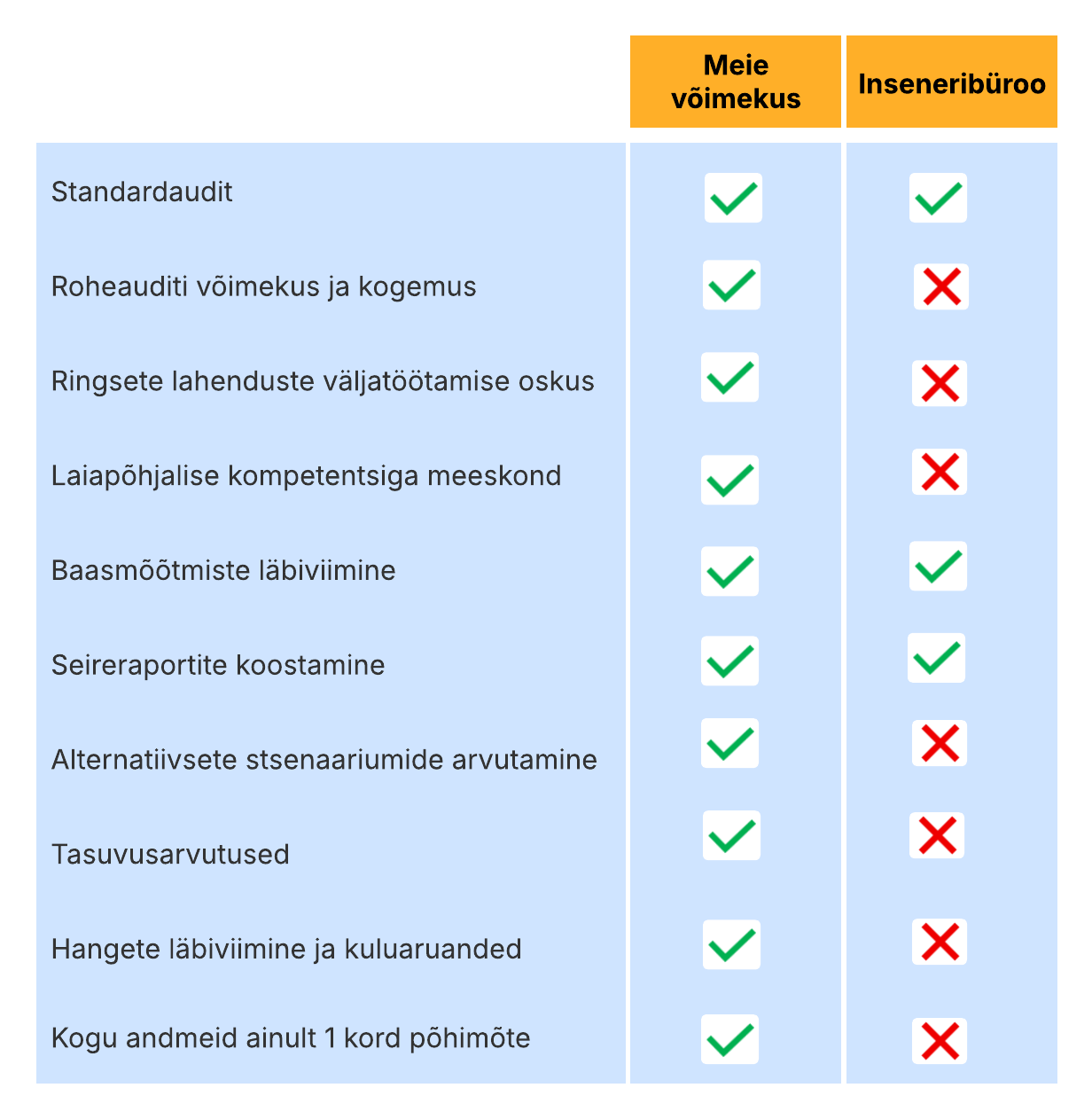
Our goal is to deliver a complete project solution and secure support funding for companies in a cost-effective manner.