
Construction procurement is increasingly requesting documentation that substantiates the environmental impact of construction products. The most widely known of these documents is the EPD (Environmental Product Declaration).
What is an EPD?
An EPD is a Type III environmental declaration that describes the environmental impact of a product over its entire lifecycle — from raw material extraction through to the post-use stage. Its preparation is based on specific rules:
- lifecycle assessment (LCA) according to standards ISO 14040 and ISO 14044;
- reporting format and procedures according to standard ISO 14025.
An EPD can only be prepared when product category rules (PCR) are in place. In the construction sector, the rules set out in standard EN 15804 apply, and there are approximately 90 general and supplementary rules for different product categories. The methodology for assessing the environmental performance of buildings is agreed upon in standard EN 15978.
A carbon footprint is no longer enough — resources must also be accounted for
Many companies assume that having an EPD automatically guarantees a competitive advantage. For buildings, the assumption tends to be that a carbon footprint is sufficient. In practice, however, winning a green procurement contract requires not just a single EPD or a carbon footprint number. To win a green procurement, it is necessary to contribute to both climate neutrality and circularity objectives, and to demonstrate:
- the environmental impacts of the product and building over the entire lifecycle;
- the application of circular economy principles.
New requirements under the Construction Products Regulation
Previously, only the carbon footprint needed to be disclosed for CE marking. Under the new Construction Products Regulation, all pre-determined environmental essential characteristics must be declared according to the following timetable:
- 01.2026 — all climate change indicators (all GWP categories);
- 01.2030 — all remaining lifecycle indicators;
- 01.2032 — radiation, toxicity, and land use indicators are added.
Circular economy principles and the digital passport
In Estonia, much is said about climate neutrality and waste management, but the circular economy theme has remained in the background. The prevailing understanding is generally that the circular economy is simply waste management in new clothing. The construction sector is, however, a resource-intensive sector and must — notwithstanding domestic assumptions — account for circular economy principles as well. The tool for implementing circular economy principles is the digital product passport, and it is this that makes EPDs necessary also on the Estonian domestic market.
New circular economy standards are being developed for the construction sector. These will define:
- principles, terminology, and metrics;
- circularity information exchange requirements for both construction product and building digital passports;
- requirements for the reuse of construction products;
- requirements and application guidance for circular design of construction works and products;
- circularity assessment methods and indicators.
The importance of EPDs and the regulatory background
Preparing an EPD always begins with a lifecycle assessment. The key question is rather: which impacts must be disclosed by law? New EU requirements and directives — including the Energy Performance of Buildings Directive (EPBD, (EU) 2024/1275) — are bringing EPDs an expanded role even for companies that do not export.
- Minimum energy performance requirements will apply from 2028.
- National threshold values for zero-emission buildings must be established from 2030.
- The Construction Products Regulation and the digital passport have already entered into force.
Update to standard ISO 14025
Because EPD standards are also being updated and circular economy principles are being added to PCRs, EPDs must from now on be prepared in accordance with the updated standards, and existing EPDs must be updated (for deadlines, see the Construction Products Regulation).
The updated version EN ISO 14025:2025 Environmental statements and programmes for products – Environmental product declarations (EPDs) is scheduled for a final vote in June 2026, but the changes are already known:
- ‘Type III environmental declaration’ is replaced by the term ‘EPD’[i];
- the role of EPDs in communication with consumers increases;
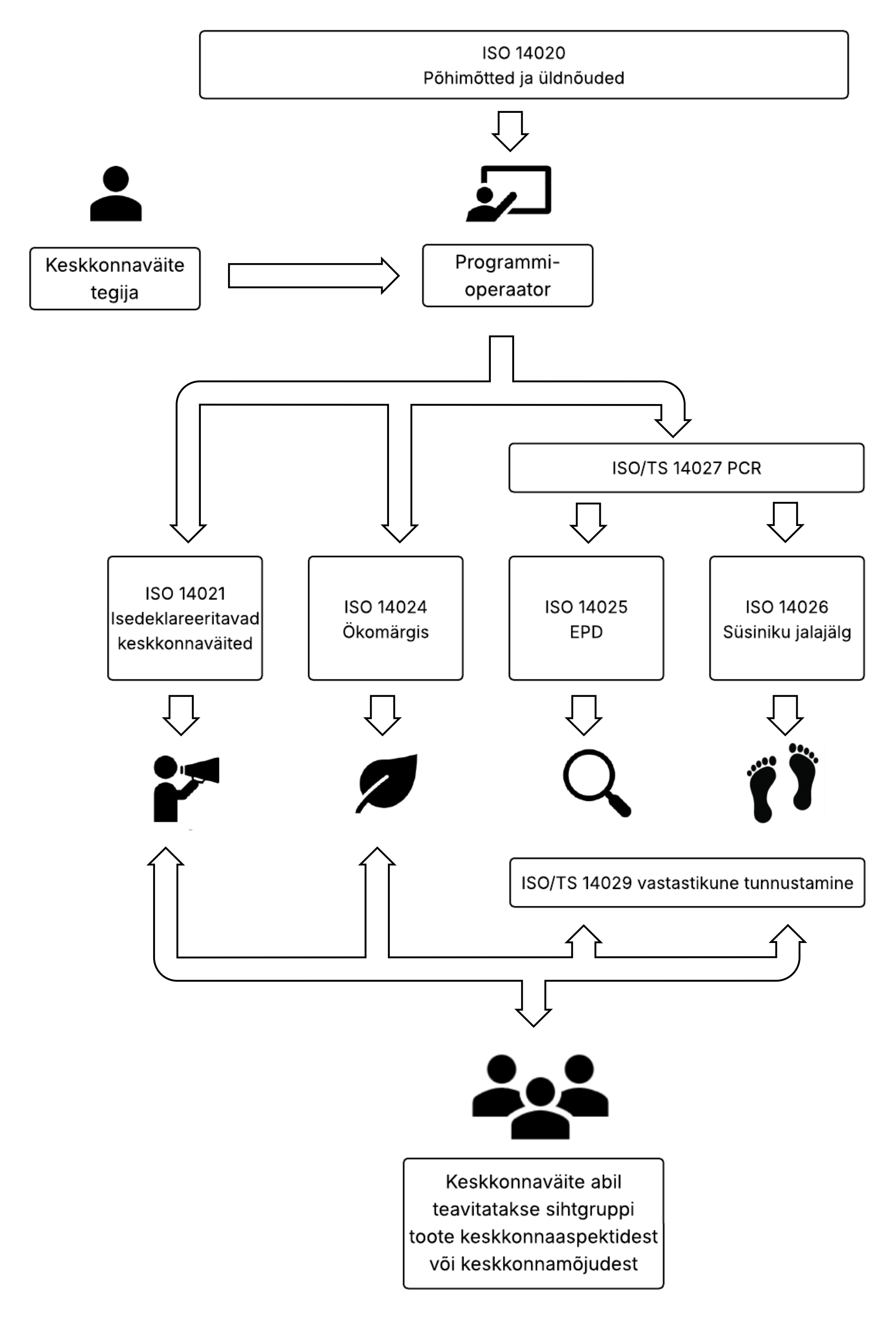
- normative references are added: ISO 14025 (EPD), 14026 (footprint), 14027 (PCR), 14029 (EPD and footprint programmes), and 14071 (LCA and environmental management);
- EPD programmes must conform to the standard (they are no longer voluntary);
- pre-determined environmental essential characteristics and indicators are added to lifecycle assessment;
- sustainability-related information about the product system must be disclosed;
- information about the absence or level of environmentally significant substances in the product must be disclosed;
- the presentation of supplementary environmental information must be comparable within the same product category, in accordance with the PCR requirements.
Summary
An EPD is no longer merely a document demonstrating the competitiveness of an exported product. It is rapidly becoming a mandatory component of both procurement processes and communication with consumers. To operate successfully, companies must adopt updated standards, link the EPD to circular economy principles, and plan environmental analysis comprehensively — rather than confining it to the carbon footprint alone.
The figure below shows the structure of the ISO 14020 standards family.
[i] EPD is an abbreviation from English and is also used in Estonian colloquial usage, although the standard does not offer an abbreviation for the concept ‘Type III environmental declaration’. Similarly, ‘PCR’ rather than ‘TKR’ (product category rules); ‘LCA/lifecycle assessment’ rather than ‘ETH/elutsükli hindamine’; ‘LCI’ rather than ‘ETI’ (lifecycle inventory); and the abbreviation ‘LCIA’ for ‘lifecycle impact assessment’ is not commonly used.